

Inheritance Tax is a bad tax. The government sends grieving families not flowers, but a massive tax bill. And in the UK the rate is a massive 40%, one of the highest in the developed world. So that tax bill which arrives amongst the condolence cards often means families have to give up or break up something they may have built up over generations - the family home, or the family business or the family farm.
From a human point of view, it is a terrible tax. That is probably why so many countries don’t have an inheritance tax, or have abolished it. Australia, New Zealand and Canada have abolished it. Norway and Sweden have abolished theirs. 18 OECD countries don’t have one - and even where they do exist they are way more reasonable. For example, in Italy children pay 4 per cent, compared to 40 per cent in the UK.
People particularly resent the double taxation here - you already paid income tax, and then they take 40% of what you saved from your post-tax income.
A broken tax
But even if you are some desiccated leftie wonk who cares nothing for pathetic human emotions and thinks about our society purely as a bunch of numbers on a spreadsheet, Inheritance Tax (IHT) is still a bad dysfunctional tax.
It’s badly named for starters - it is actually an estates tax, not a tax on inheritances, so takes no account of how much the recipients have or how much the wealth is spread. I don’t think any economists think this is sensible.
It’s also trivially easy for truly wealthy people to avoid. You simply set up a trust, and trusts, being immortal, do not die and do not pay tax either. You might ask, why can’t we abolish all trusts (and maybe companies)? Or why can’t we tax them somehow? That’s a long story, but suffice for now to say that solving this problem has proved impossible even for very bright and highly motivated people, from Ed Balls and Gordon Brown to Nigel Lawson, this problem has not proved fixable. You can also avoid it simply by gifting assets - as long as you don’t then die within seven years.
This is why it has often been criticised even from the left.
Even Labour’s favourite think tank, the Resolution Foundation - when it was run by brainy Labour Minister Torsten Bell - said that “Inheritance Tax should be abolished.” Resolution noted that:
“it is regarded as Britain’s least fair tax. This unpopularity is due in part to it being perceived as a tax on the dead, having a high marginal rate of 40 per cent, and because it is often seen as merely a voluntary tax for the very rich and well advised.”
It obviously kills me to write this, but Torsten was right about that1.
More and more sucked in
While the rich do not pay it (unless they get unlucky and die unexpectedly or something) more and more normal people are being sucked into paying this bad tax.
Why? The threshold for paying is £325,000, a rate set in 2009, which Labour plan to keep frozen until at least 2031. George Osborne added an extra £175,000 for family homes. So a single person can pass on £325,000 tax free or £500,000 (if they have a house worth over £175,000). You can pass your allowance to your spouse, so a couple could pass on a £1m property to their kids.
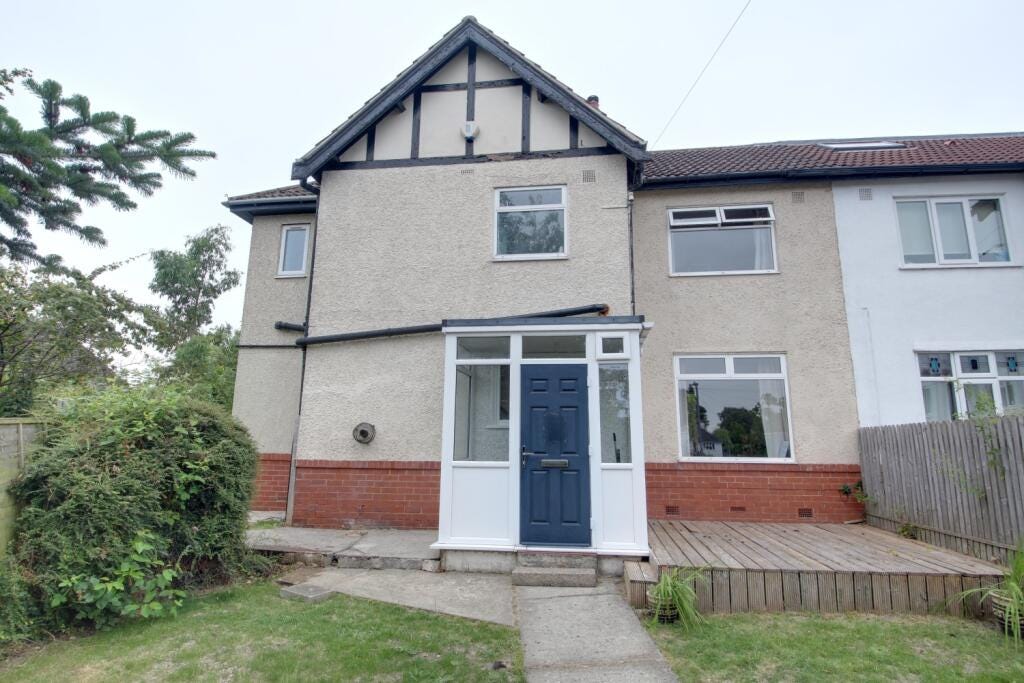
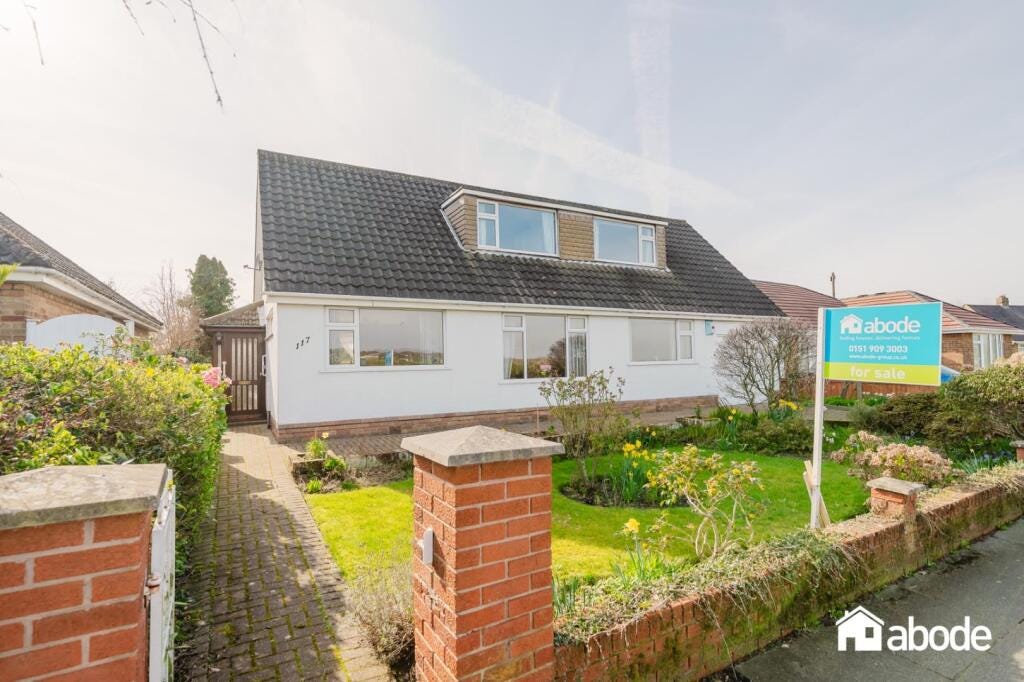
But with asset prices rising and the threshold frozen, more and more people are being sucked in. There are a lot of £500,000 homes in the UK these days. Here are some examples of houses that cost £500,000.
Here’s what that gets you in Leeds:
Or in Liverpool:
Or in Swansea:
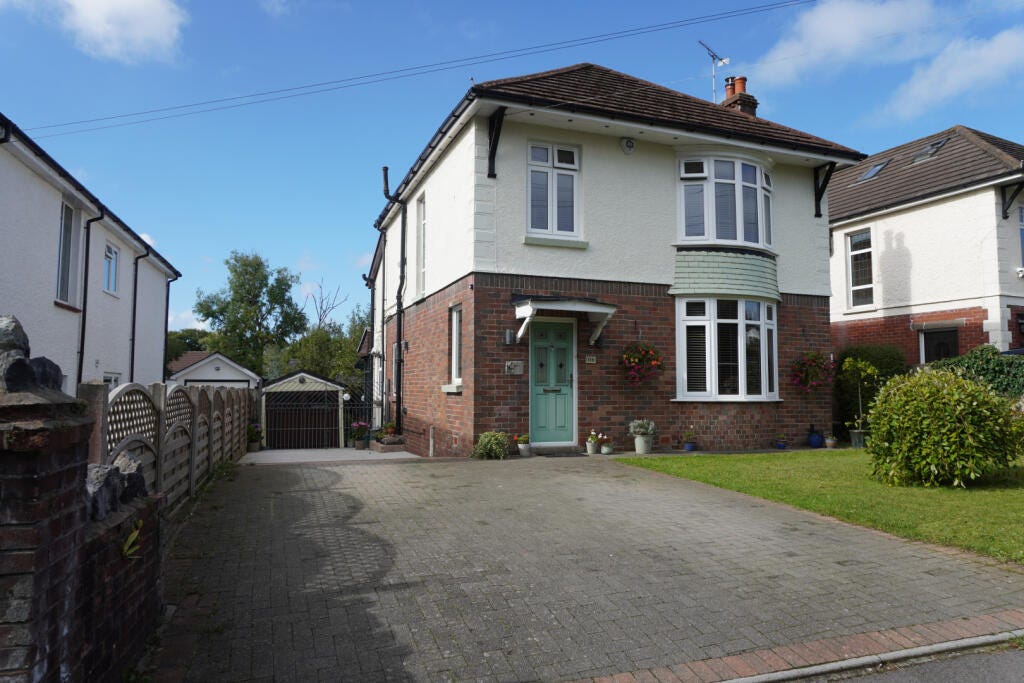
To be sure, these are solid family homes. But they are not the super wealthy.
A couple could pass on a £1m house. Here is a £1m house - the white bit. It’s really nice, but the mental picture some people have of IHT payers as living in stately homes is wrong.
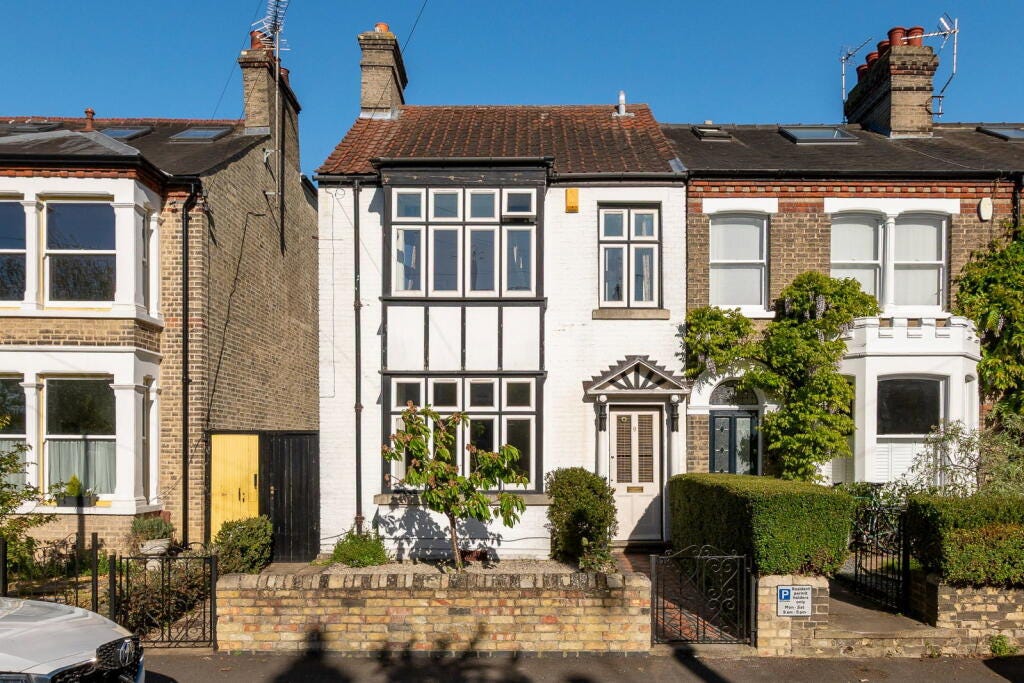
And yet, some people still do think of IHT as a tax on people in stately homes. But the very rich aren’t paying. Instead, it’s become a tax for normal people who live on new build estates, not fancy people who have estates.
On average between 2001 and 2024 about 4 per cent of deaths led to an Inheritance Tax bill. By 2030 Labour will have more than doubled that to 9.5 per cent. That number is an underestimate of the impact though: around 16 per cent of families will be paying (or just under one in six).
Because spouses are able to pass on to their partners, the share of deaths paying is smaller than the number of families paying. Unless someone does something, this fiscal drag will just go on and on until we are all paying.
Growing pains
As well as being brutal on grieving families, Britain’s IHT regime is bad for growth and is driving investors overseas - meaning they take their business and all their tax revenues with them. While you can avoid paying IHT with trusts and other tax planning, people who are still actively investing don’t always want to lock up their money.
An adviser to Lakshmi Mittal, the Indian steel billionaire, said that levying Inheritance Tax on otherwise exempt assets resulted in him leaving the country. Chris Rokos, who was Britain’s third biggest taxpayer left the UK last month and “reportedly cited reasons including non-domiciled resident payments, Inheritance Tax concerns and private school fees.”
A 2024 survey of tax advisers by Oxford Economics found that Inheritance Tax was the most cited reason for considering migrating from the UK among both investors and entrepreneurs.
A study of the US by Moretti and Wilson find very wealthy people move noticeably away from US states with estate taxes. There was a great natural experiment in 2001 when an offsetting Federal tax credit was eliminated, meaning state-level inheritance taxes suddenly mattered - the number of very wealthy people in the states with estate taxes fell by 35 per cent. There’s also a bundle of evidence on the negative impact on family owned businesses and capital formation.
But it isn’t just losing big investors that causes IHT to be bad for growth. It creates a huge incentive for productive professionals to retire early.
Inheritance Tax at the UK’s high rate also gives people later in their careers who know they are nearing the threshold a huge incentive to retire earlier - rather than work and face this double tax. You might be paying a 62% marginal rate and THEN 40 per cent of what you take home after that. Why not retire a bit earlier rather than give three quarters of what you earn to the government?
Getting rid of inheritance tax
On the Conservative side, we believe that if you work hard and save, you should be able to pass that on to the next generation – especially the family home. The Conservative Party has always been the party of homeownership, owning a home, passing it on and giving you a stake in society is an enduring Conservative value.
Labour have been going in the other direction, abolishing important reliefs we created to protect family businesses and family farms. We have already pledged that we will scrap the family farm tax, scrap the family business tax, and we have forced Labour to scale back these things to the point where they now raise quite small sums.
But we want to go much further, so Kemi announced the following this week:
We plan to abolish IHT.
Given that we also need to fund defence, build more prisons and cut government borrowing amongst other things, we can’t promise to fully abolish IHT right now (because we will only promise tax cuts we are sure we have a clear route to deliver).
So, as a first phase we will abolish IHT on the family home.
And we will raise the threshold for other assets on top of this to 500k per person or £1m for a couple.
A lot of people seem to have missed that last bit, but hold it in mind for what follows. Our proposed new £1m threshold is a more generous increase than it looks, because at the moment most will be using up their £325k on the house value as well as the Residence Nil Rate Band, so £1m on top of full relief on the family home is a very big increase in practice.
Taking the family home out of inheritance tax
We want and plan to get rid of inheritance tax. And we thought long and hard about what a first phase of inheritance tax abolition might look like. The loss of the family home is the thing that people hate most about IHT. It is the thing that is sucking in people who never thought they would pay, and are normal people not in a position to do tax planning, and whose families are surprised to be presented with a big bill. That’s why we will abolish IHT on the family home.
We also thought long and hard about any side effects that might have and the wider context.
While we want to move quickly to abolish IHT altogether, what would happen if we had to stay in this first phase for a while?
Would people stop downsizing? Would people shift loads of assets into high end property, creating a property bubble? While we ultimately don’t want anyone to be paying inheritance tax, we don’t want to gum up the property market in the meantime.
There are several things we can do to prevent these problems.
First, we have already announced that we would abolish stamp duty on people’s primary residence. That will do more than anything else to free up the property market. Stamp duty is a much more important obstacle to people moving - research suggests that up to 2 million people would consider downsizing within five years if it were abolished. Stamp duty applies to all movers every year, so has way bigger impact on the property market than IHT will. Older people rarely move and are a very small share of transactions.2
Abolishing Stamp Duty also increases allocative efficiency, so increases effective supply, which exerts downward pressure on housing prices and costs. It’s a bit like if you shake your bin bag a bit as you are taking it out - because the stuff inside can now move around, it forms a more efficient shape with fewer gaps.
What about all those people who have masses of assets who might now engage in a property arms race to bid up the price of a large home to avoid IHT? In truth people who have loads of money aren’t going to pay IHT anyway, as they are already using trusts and other tax planning vehicles. The people who are paying it are people who bought a house ages ago and find out that it is now worth £500,000. The thing that stops them spending billions on expensive mansions is that they don’t have billions - often their home is their only real wealth.
Some people of course do have more. But we are proposing to allow couples to pass on a million of other assets as well, tax free, on top of their home. The number of people who (A) have more than a million in non-property wealth on top of their family home and ALSO (B) are not doing any tax planning or creating a trust is pretty small. As the Resolution Foundation and the IPPR have pointed out, this is an easy tax for very wealthy people to avoid - it hits the middle class and the unlucky.
Given the impact of abolishing stamp duty in freeing up the property market any impact on the property market is likely to be very small - for however long we stay in this first phase before we abolish IHT.
As it happens, there are also existing tax rules within the Residence Nil Rate Band (the thing we are increasing from £175k to unlimited) which already allow a further allowance for downsizers.
As we move into the detail of implementation then, even if all the above was wrong and it did emerge as a problem, then we could update these rules to avoid any side effects or edge cases - but I think people are wrong to think the effects are anything but very small.
What’s the cost?
The costing and analysis of this policy was done over months by leading economic analysts Oxford Economics. This is a serious firm, producing high quality work.
Dan Neidle has done a rapid reaction to the proposal overnight. He claims that the cost would be much higher and that no-one even thought of the potential side effects. This is of course silly, and these issues have been given a lot of thought.
In reality Oxford Economics have been working on this for many months - whereas Dan is doing a quick reply overnight (so the contest is a bit unfair).
But precisely because Dan is someone I like, and take very seriously, I have to say he is not right this time.
Oxford Economics spent months building a full model based on a similar bottom-up approach to that used by earlier work the IFS did (Arun Advani and David Sturrock’s groundbreaking 2023 paper). When you run their model it produces numbers that match the numbers we see in the real world - a good start!
In contrast, Dan admits his own simple model “over-predicts the number of taxpaying estates against HMRC’s outturn by about 1.6 times, and tax liabilities by about 1.45 times.”
That is where the big problems start. Having got initial numbers that are way off, Dan then just manually scales down his findings: “We use the proportional change in modelled tax and apply it to actual receipts or the OBR forecast.”
He admits “That is useful only to the extent that the errors affect baseline and reform similarly.”
But those errors in his model don’t affect the baseline and the tax cut reform similarly - because the error is likely caused by (as he suggests himself) “spending, gifts and tax planning”.
All these gaps are reduced by the tax cut - you are less likely to engage in tax planning if the tax is lowered! You are less likely to spend out or give it away too. So, the efforts he is making to scale down to get down to the right baseline need to be larger, not the same for his post-reform costing.
There are some other basic errors of fact in Dan’s piece. He says, “About 2% of older homeowners move each year (English Housing Survey)”.
But he should have read on a bit further - the English Housing Surveys in 2018/9, 19/20 and 20/21 say it is just over 1% of owner occupiers (or to be precise, 1.2% in 18/19, 1.6% in 19/20 and 1.3% in 2020/21)3
He says 36% to 47% of older movers move to somewhere smaller or cheaper - based on a report for Manchester. But the English Housing Survey 2021/22 says only 20% move to downsize. Data from EHS 2024/5 says 28.3% of those aged over 65 move to downsize.
He doesn’t appear to have noticed (and there’s no reason he would have in fairness, he’s a busy man) that we have cautiously already scored and accounted for the costs of abolishing the APR and BPR reforms (the “family farm tax” and “family business tax”) separately.
Others have also not noticed. One smart investor asked: why invest in private companies or other productive assets and potentially pay IHT, when you can put the money into a bigger house? We have already said that we would abolish the family business tax and restore the full allowance for businesses - so if you want to invest in your company you won’t be paying any inheritance tax any more anyway!
Dan thinks there would be an enormous drive to upsize into housing. But I can’t see from anything he has written what account he has tried to take of the other part of the proposal, the enormous increase to a £1m per couple allowance for other assets on top of whatever property people have.
More importantly, it doesn’t account for the fact that people with assets don’t carry their money around in cash. Take his example:
“For example, someone with a £2m house and £10m of financial investments could sell £5m of investments and buy a £7m house. That potentially moves £5m out of the taxable estate and saves £2m of inheritance tax.”
Dan appears to have forgotten that there is normally a large tax associated with turning £10m of investments into cash. For instance, if that cash attracted the maximum 24% rate of CGT, then selling £5m of investments would incur a £1.2m CGT bill. This would remove more than 50% of the proposed savings from putting the money in a house instead.
If the £10m is in a pension, then withdrawing £5m of it will incur 45% income tax. In this scenario, you’d be paying ~£2.25m in income tax to save £2m in inheritance tax. This feels pretty unlikely, even in the already rare scenario of someone in their 80s being willing to move homes.
As noted above, the number of people who are in that league of wealth and who ALSO aren’t doing any tax planning is quite small. I can’t see what account he has taken of this at all.
It is worth recalling that primary residence is already tax advantaged: free of Capital Gains Tax and already with an additional allowance in IHT, which has not caused the sky to fall in, despite similar predictions when it was introduced.
So the idea that this will “gum up the property market” in a context where you are also abolishing stamp duty is implausible - Dan doesn’t mention that context anywhere in his methodology, and it is highly relevant because abolishing stamp duty would make it easier to downsize and puts downward pressure on housing prices.
Oxford Economics respond
Oxford Economics, who did the original work have set out their response to Dan Neidle here. Amongst other things they point out that:
The TPA’s £9.0 billion estimate is based on data taken from Wave 8 of the Wealth and Assets Survey (WAS) from the ONS – a version that has had its accredited statistical status suspended. For this reason, we used data from Wave 7 as our starting point.
Estimates from our model for both IHT liabilities and the percentage of estates liable for IHT closely track data from HMRC over the 2019/20 to 2023/24 period (see section 2.2 of our report for further details). In contrast, the TPA model significantly overestimated both measures when back tested.
They also note that
TPA also model a series of additional behavioural responses based on their own judgements which significantly increase the cost of the policy. For example, their upper bound estimate assumes that 15% of households’ taxable financial wealth will shift into their main residence based on the rationale that it will lead to a 40% saving on a future IHT bill. We agree that a full residence exemption would create an incentive to shift wealth into housing but chose not to seek to model this effect due to a lack of available precedent and our view that the short-term impact (by 2029/30) is likely to be marginal, due to a range of reasons.
Firstly, primary residences are not productive assets. Over the last 10 years the average annual growth in UK house prices was around 4%, while global equities (inclusive of dividends) grew around 12%.1 This difference plus upkeep costs and increased council tax payments (including the High Value Council Tax Surcharge) on a larger home is significant enough to mean that this decision makes less and less financial sense the longer someone lives after upsizing.
Secondly, housing wealth is illiquid, while this may not matter for the ultra-rich it will matter for many households with financial wealth above the standard nil-rate band. They will be reluctant to tie up wealth that they need to depend on in their later years.
Thirdly, the tax system disincentives this behaviour. Individuals would face a significant stamp duty bill which could be in the region of 10% of the new property’s value2. At the outset, this would significantly erode the IHT savings that the individual is seeking to avoid. Furthermore, many individuals accessing the funds needed to upsize will face either a Capital Gains bill, which could approach 24%, or pay high rates of tax when withdrawing from their pension.
Finally, on a more human level, individuals in their later years will be reluctant to upsize due to emotional attachment to their homes and wanting to avoid the stresses of moving or extending their family home.
Overall, we are confident in our tried and tested modelling approach.
Conclusions
I finish where I started. IHT is a bad tax which is widely hated. We want to get rid of it, but are also conscious of all the other urgent challenges we must face - particularly defence. The first poll on our proposal shows that 61% support it and only 18% oppose it - a majority of people support it among the supporters of every political party, in every class, every region, and every age group.
Various people have subsequently popped up to try and rubbish the careful work that has been done by serious experts over months to cost this proposal accurately. Various people (including people who don’t want to cut IHT at all!) have seized on this, but these criticisms are themselves clearly very flawed.
Without much public debate or discussion Labour have stealthily set us on a course to double the number of people paying a tax which is so widely disliked - and is so dysfunctional - that even people on the left admit it has to be abolished. They want to have a greater proportion of people paying than even Gordon Brown or Tony Blair or Alistair Darling ever thought was sustainable! And on top of that they want to pile on even more taxes on homes and property and are working up a third round of damaging tax increases.
A fork in the road has been reached.
Labour think that your income, your pension, and your savings are theirs to take and then hand out as they see fit. We think that if you work hard, live frugally and save you should be able to pass something on to your children.
They called for it to be replaced with a new Lifetime Receipts Tax, with a much lower rate. There would be a lot of issues with that, but at least they recognise the issue about the huge marginal rate. Similarly, the IPPR also argued that “Inheritance Tax should be abolished”, noting that “Inheritance Tax is unpopular” with too many opportunities for avoidance.
Owner-occupiers over 65+ almost never move.
English Housing Survey data shows that only ~1% of 65+ owner occupiers move in any given 12 months, far fewer than younger cohorts:
26% of 26-34 YOs have moved in the past 12 months
7% of 35-64YOs have moved in the past 12 months
Downsizing is very rare among older home owners who do move
EHS data shows only ~20%-28% of older people moves are to downsize
This means that there is barely any downsizing happening already
There are 7.4m 65+ households in England (EHS July 2026)
If 1% of them move in a given 12 month period, that’s 74k moves.
If 20% of them are downsizing, then that’s just 14.8k downsizers per year.
Downsizing is therefore a tiny proportion of total property transactions
HMRC estimates there will be ~500k residential property transactions in 2026/7
References for the EHS figures:
EHS 2018/19, Table 3.3
EHS 2019/20, Table 3.2
EHS 2020/21, Table 1.11
EHS 2024/5, Table 4.1
It's impressive for a politician to engage this seriously with policy, so thanks.
But it's a horrible policy idea, which adds another carve out to the tottering pile of carve outs that is British policymaking these days. It must be political goggles that make one see protecting the tax free capital gains on houses from the taxman, in perpetuity and at all costs, as being among the country's priorities.
No doubt the politics works as the vast majority of Brits whose estates won't fall under IHT have been convinced otherwise. No doubt this will turn some heads in Lib Dem or Lib Dem-curious constituencies in the south east. But still.
Look forward to seeing Dan Neidle's response, and hopefully Oxford Economics can demonstrate as much transparency about their calculations as he does.
The worst is that in the UK inheritance tax is the same whether a family has one child or ten children. In most reasonable regimes in the civilised world tax free allowances rise with the number of children...